
Contest Environment
Hardware
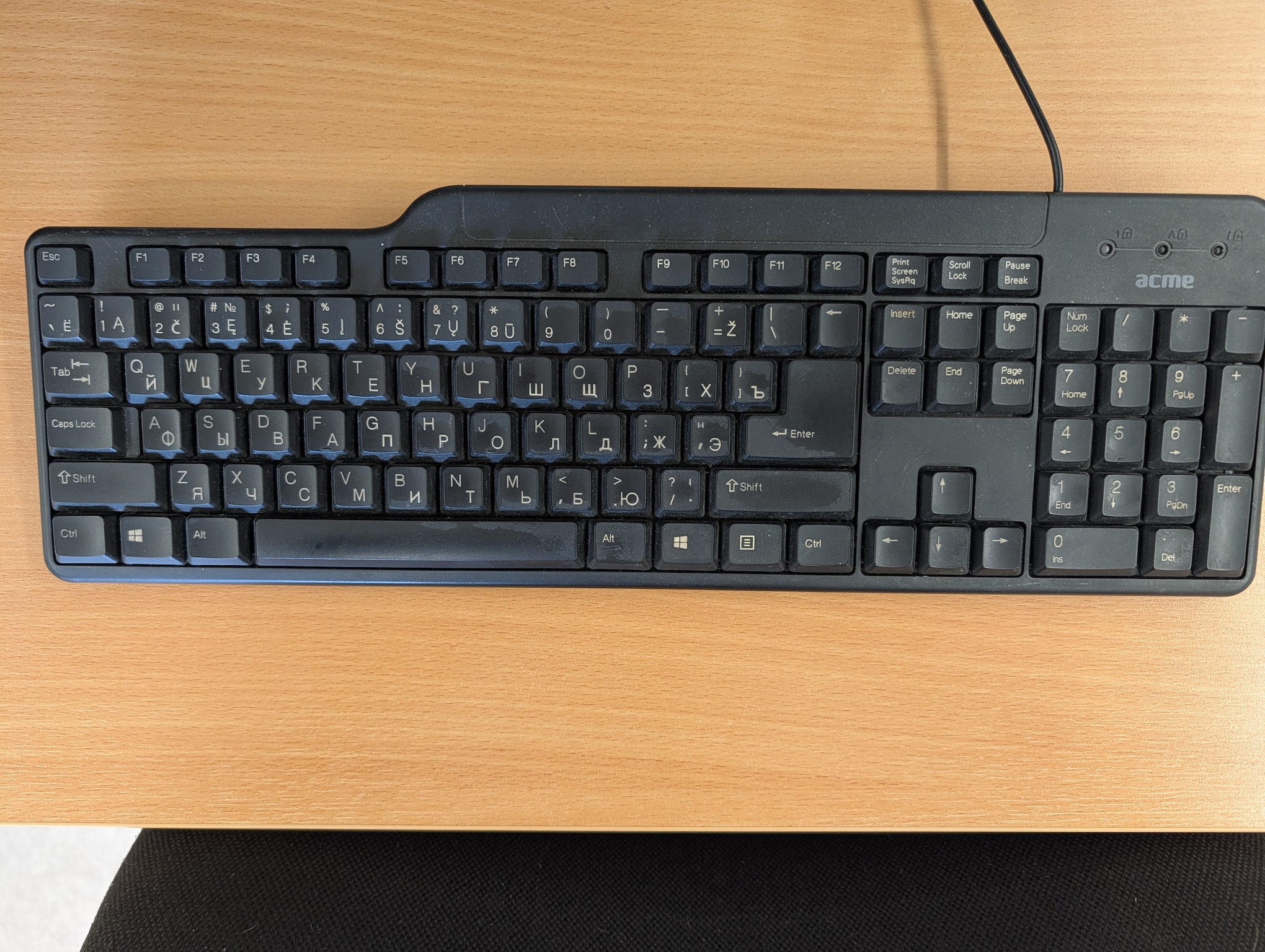
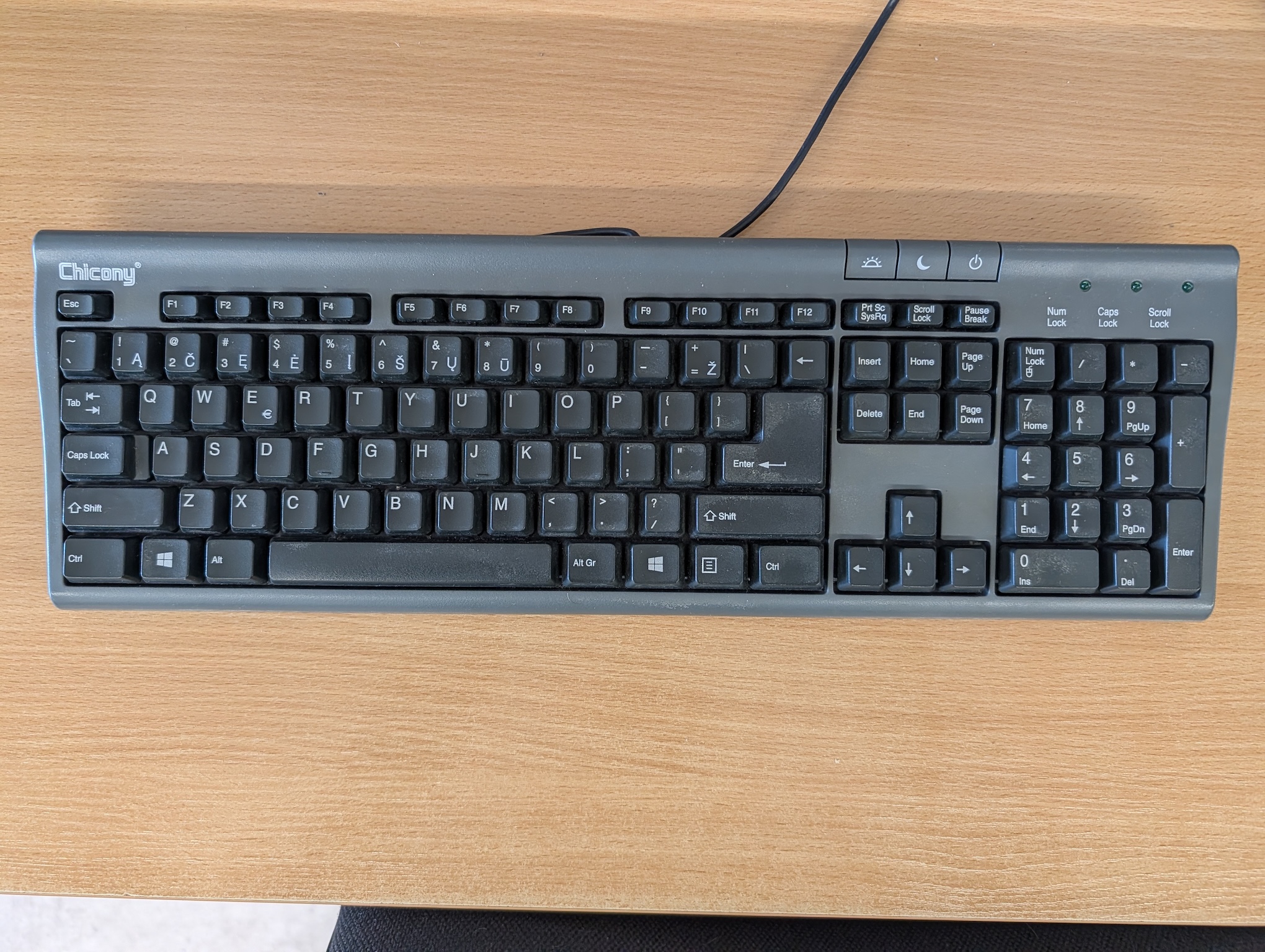
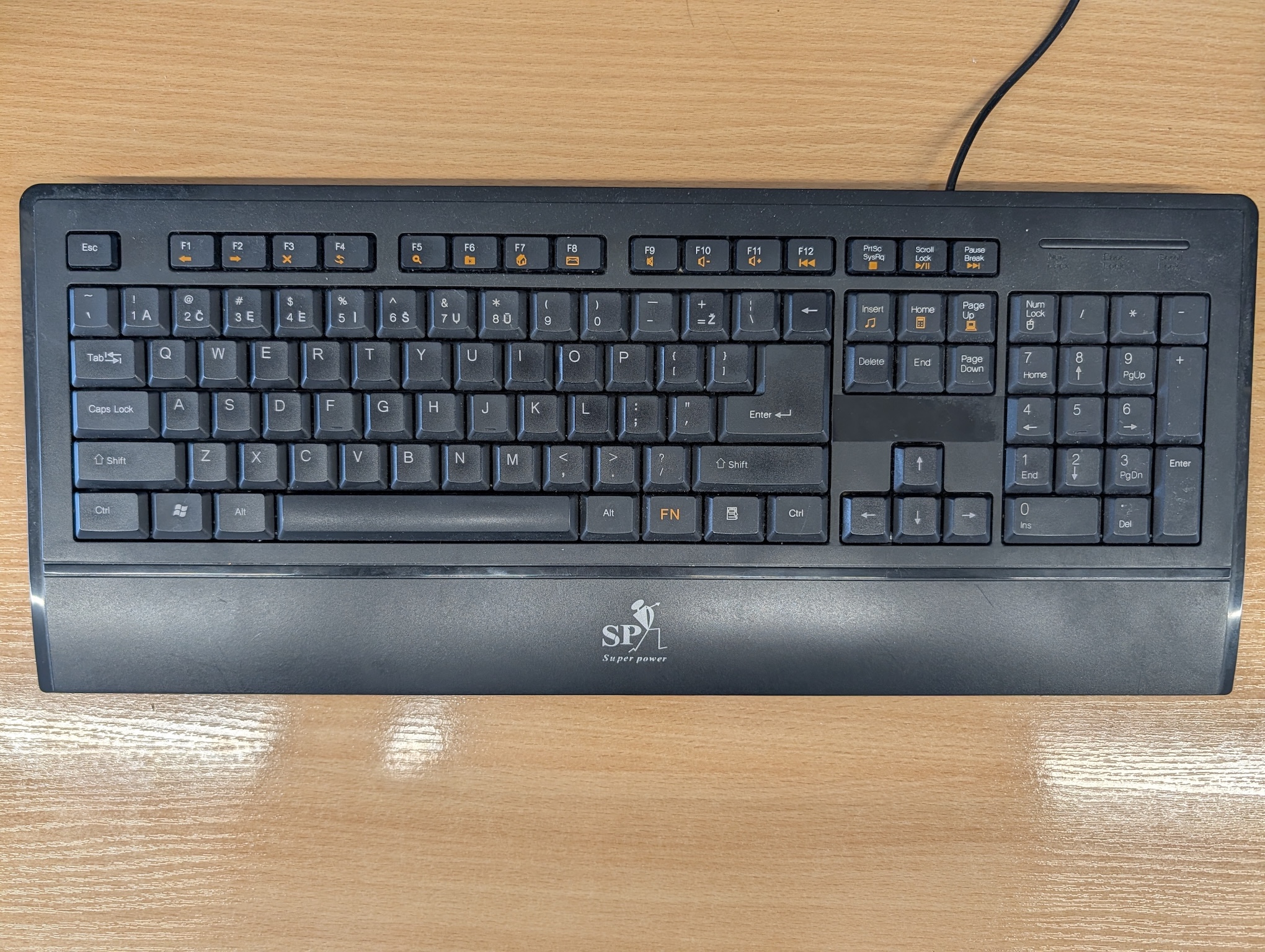
Contestants are provided with a Dell Latitude 5495 laptop with a Ryzen 5 PRO 2500U CPU and 16 GB of RAM. This is connected to a 24 inch FHD monitor with 1920×1080 resolution, a full-sized wired keyboard, and a wired mouse. Photos of keyboards are provided below.
According to the rules , contestants may bring their own USB keyboards and mice, provided that they have no wireless communication and no programmable functions whose configuration is retained when unplugged.
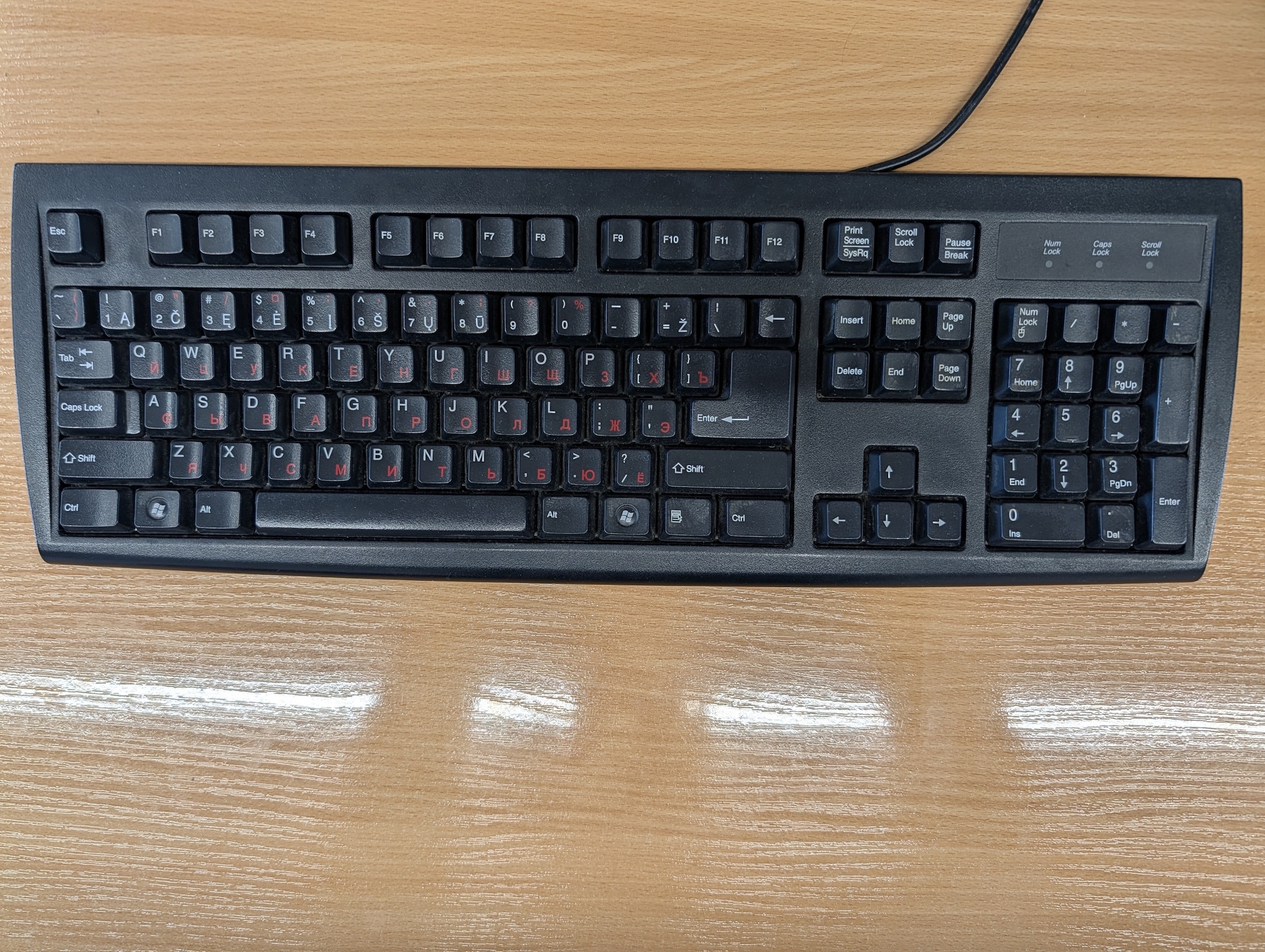
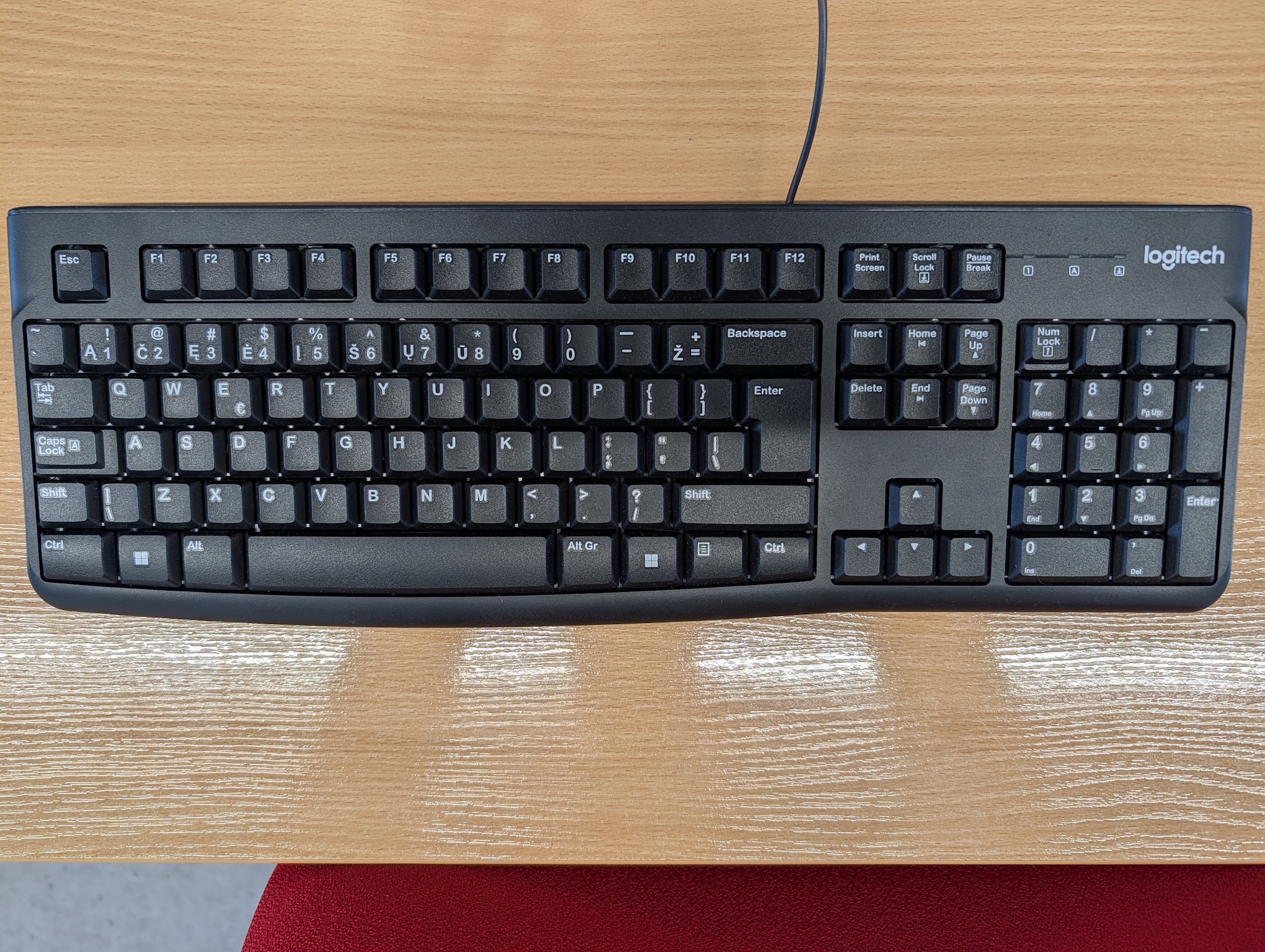
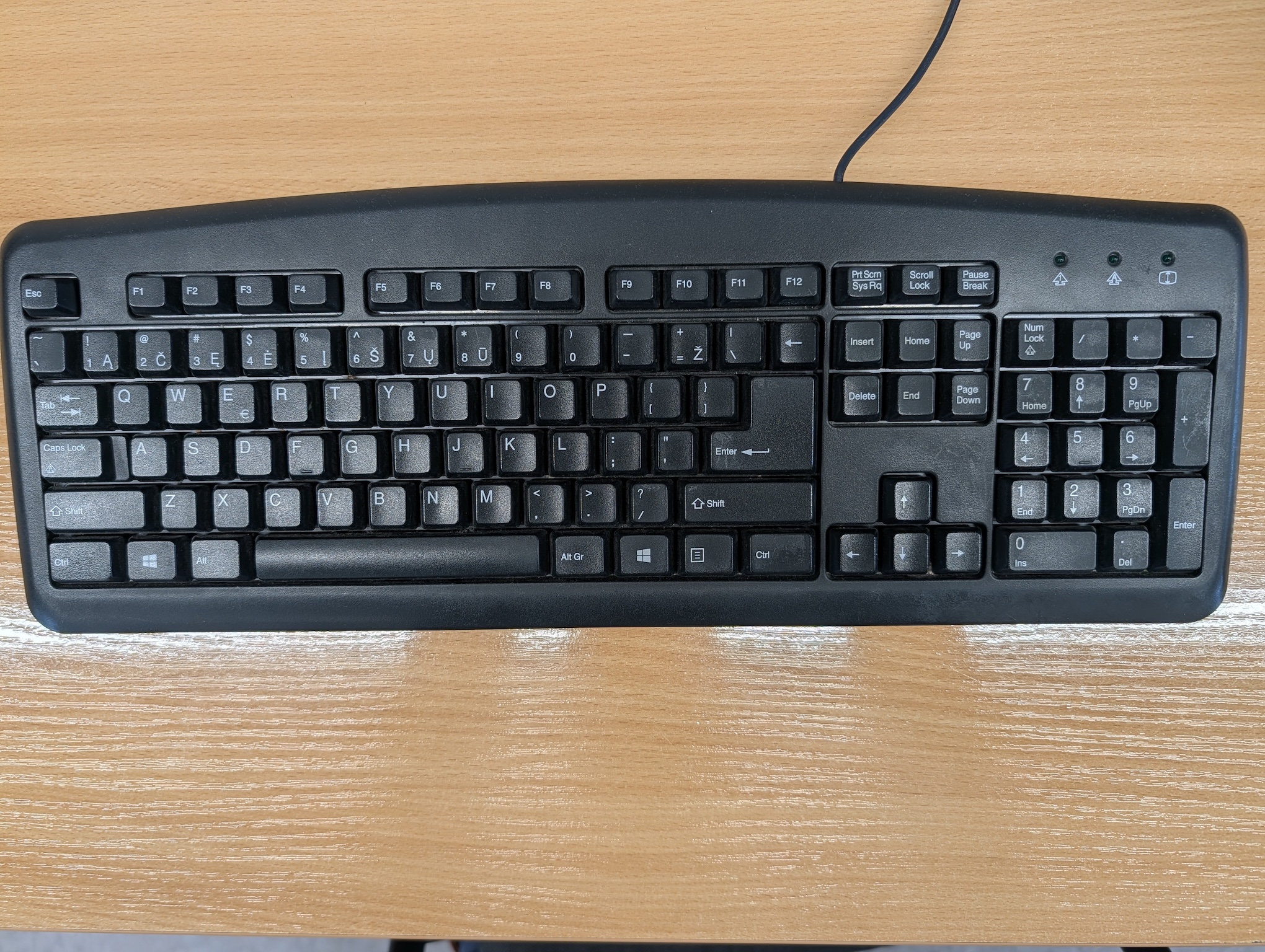
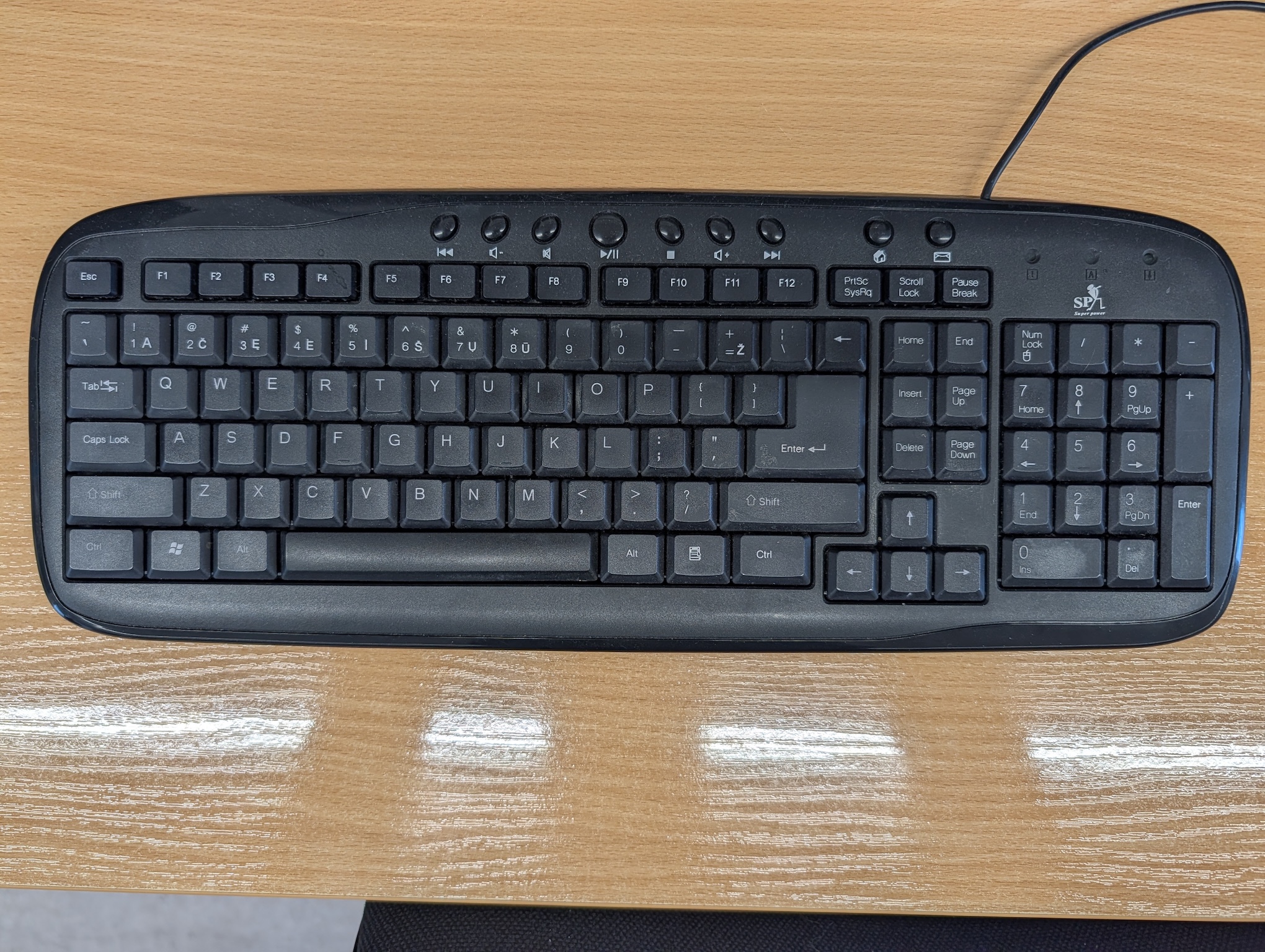
Software
Every laptop boots to a copy of Debian 13 with the KDE Plasma desktop environment.
The following software is installed, with minor versions of packages subject to change before the contest.
Operating system
- Debian: 13 (trixie)
- KDE Plasma: 6.3.6
Compilers
- GCC: 14.2.0
- Clang: 19.1.7
Debuggers and profilers
- GDB: 16.3
- DDD: 3.3.12
- valgrind: 3.24.0
- GNU gprof: 2.44
- perf: 6.12.74
IDEs and editors
- Visual Studio Code: 1.114.0 (or newer)
- C++ Extension (for VS Code): 1.31.4
- Code::Blocks: 25.03
- Vim: 9.1.1244
- GVim: 9.1.1244
- Neovim: 0.10.4
- GNU Emacs: 30.1
- Sublime Text: Build 4200
- joe: 4.6
- gedit: 48.1
- SciTE: 5.5.6
- Geany: 2.0
- Kate: 25.04.3
Miscellanea
- Firefox: ESR 140.9
- LibreOffice: 25.2.3.2
- Python: 3.13.5
- Ruby: 3.3.8
- tmux: 3.5a
- GNU Screen: 4.09.01
A copy of cppreference.com will be available via CMS.
Grading
Grading System
Contest Management System (CMS) will be used as the grading system. The exact commands used for compilation for each problem will be shown on the grading system. With the exception of certain task types, the compilation command will generally be of the following format:
/usr/bin/g++ -DEVAL -std=gnu++20 -O2 -pipe -static -s -o task grader.cpp task.cpp
Note: The compilation scripts provided to the contestants use a similar compilation command, except that they do not include -DEVAL and use the -g flag instead of -s.
Grading will be performed on dedicated cloud machines, hence the execution timings could differ from those observed on the contestant machines. The grader environment will be using the same operating system and compiler version as the contestant machines.
Protocol Violation
A contestant may receive a Protocol Violation feedback if their program does not follow the correct protocol described in the problem statement. This typically happens in the following situations:
- Reading from standard input or printing to standard output
- Calling
exit()
However, other violations of the protocol – particularly those involving grader procedure calls – should generally result in the solution being judged as incorrect. This will be reported in CMS as follows:
- Output isn’t correct: Invalid argument – a grader procedure was called with invalid arguments.
- Output isn’t correct: Too many calls – a grader procedure was called too many times.
Task Attachments
There is an attachment package that you can download from the contest system, containing:
- Sample graders
- Sample implementations
- Example test cases
- Compile and run scripts
Each task has a subtask with index 0 which is worth 0 points. Unless specified otherwise in the problem statement, the test cases for this subtask are the same as the sample test cases included in the task statement and in the downloadable attachment.
When you test your code on your local machine, we recommend you to use the scripts from the attachment packages.
Please note that we use the -std=gnu++20 compiler option.
Sample Graders
Sample graders provide a basic mechanism for running your solution. However, in many cases they are simpler than the graders used to judge your solution, e.g., they often simply print the answer of your solution without verifying its correctness.
When testing a program with the sample grader, your input should match the format and constraints from the task statement, otherwise, unspecified behavior may occur. Every two consecutive tokens on a line are separated by a single space, unless another format is explicitly specified.
The sample grader input and output format are described in a symbolic way. Consider an example:
N         M
A[0]      A[1]    …    A[N-1]
P[0]      Q[0]
P[1]      Q[1]
...
P[M-1]    Q[M-1]
In this example:
- The first line contains the values of N and M separated by a single space.
- The second line contains N space-separated values, giving the values of A[0], …, A[N-1].
- Important This symbolic notation does not mean that there are at least 3 numbers in the line. We can have for example N=1 (there is a single value in the line) or even N=0 (the line is empty).
- The next M lines contain pairs of values arrays P and Q, which are of length M. As above, we may have M=0 or M=1.
If a sample grader procedure call violates some of the constraints in the task statement, the sample grader may print an error message and terminate immediately. Unless specified otherwise, the error message is one of the following:
- Invalid argument – a grader procedure was called with arguments which violate a constraint provided in or following from the task statement.
- Too many calls – a grader procedure was called more times than the limit provided in the task statement.
Note that the contestants can inspect the sample grader source code to see what triggers this error and/or modify the sample grader to print more information.